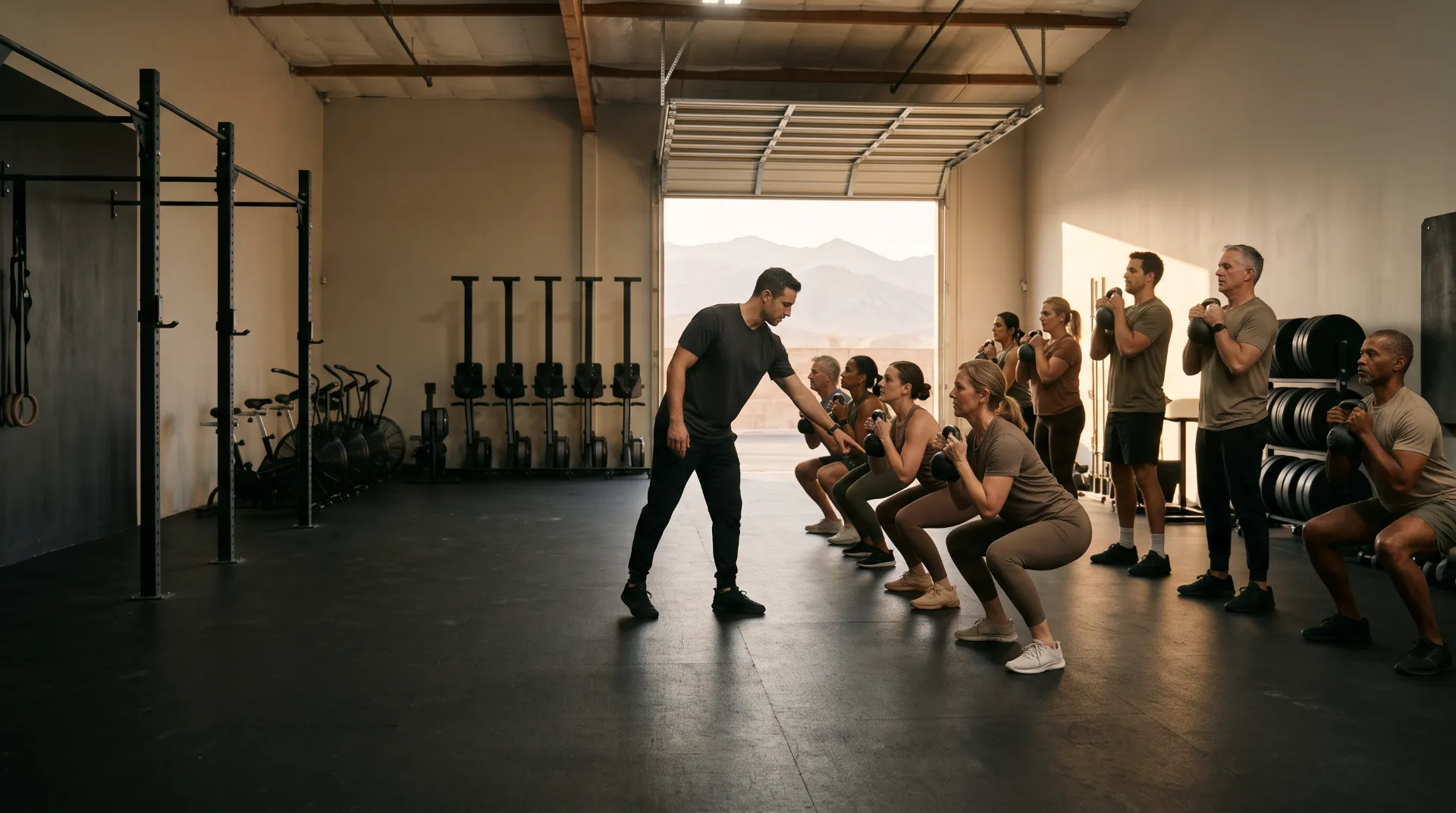
One of the first questions people ask about coach-led group classes is how a single workout on the board can work for everyone in the room. The answer is scaling. Scaling means adjusting a workout so each person gets the intended effect safely and at a level that matches their current capacity.
Four Ways Coaches Scale a Workout
A coach does not have to invent a completely separate workout for you to get a good session. Usually they adjust one or more of four elements:
- Load: Using a lighter dumbbell, kettlebell, or barbell weight, or working with bodyweight instead of added load.
- Repetitions (Reps): Lowering the total reps or rounds so the workload stays manageable for your current skill, stamina, and recovery.
- Movement: Choosing a movement option that trains a similar pattern while matching your current mobility, coordination, or comfort level.
- Pace: Working at a steady, controlled speed rather than rushing through intervals or conditioning pieces.
Examples of Adjustments and Common Mistakes
In general terms, adjustments keep the focus on the movement pattern and workout goal while meeting you where you are. If a workout features a complex or heavy lift, a coach might suggest a lighter weight or a simpler variation that reinforces clean mechanics. If a conditioning block includes a high-impact or fast-paced movement that does not suit you that day, they can offer another option that hits a similar effort.
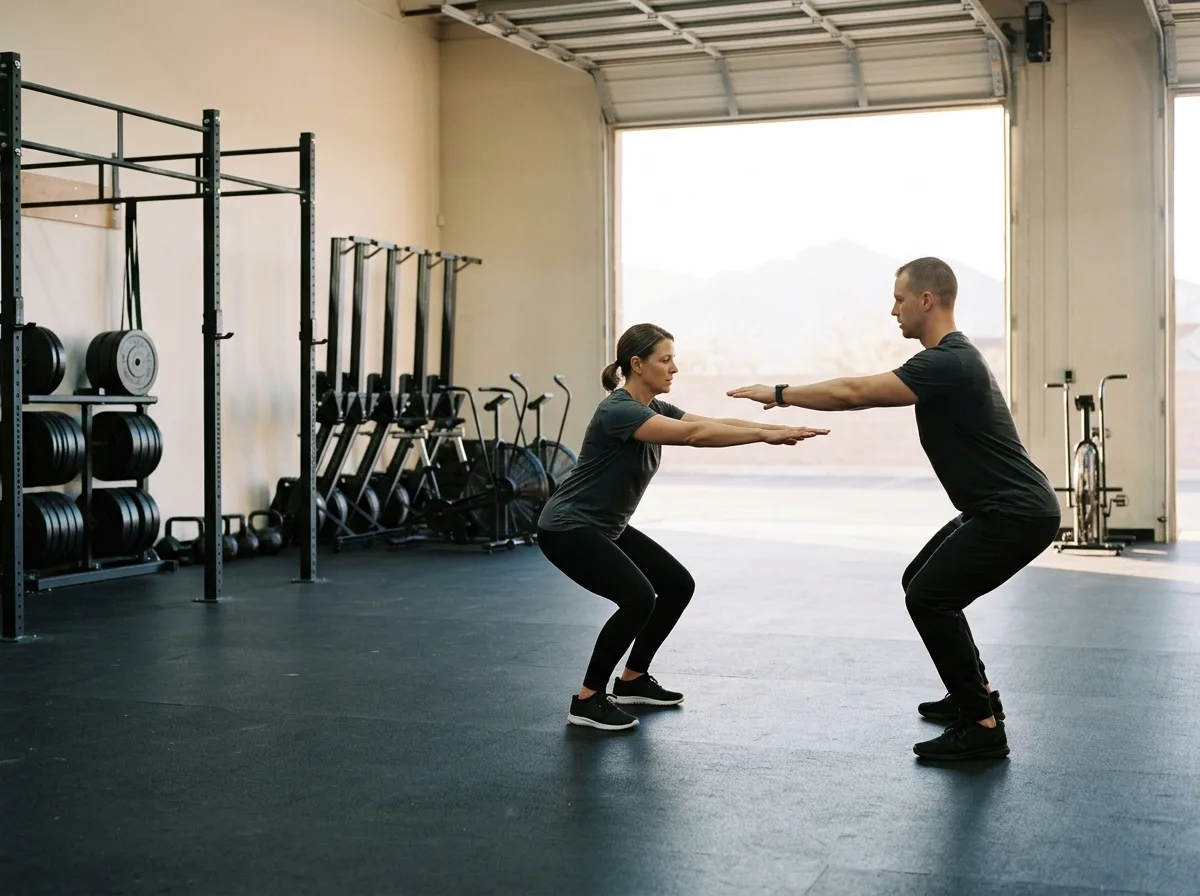
A common mistake for beginners is picking weights or a pace based on what someone next to them is doing rather than what lets them move cleanly. Another mistake is scaling down every single piece even when a movement feels smooth and controlled. Coaches watch your posture, breathing, and bar or implement speed during practice sets to help you pick an option that makes sense for that day.
If you have an injury or health condition, check with your healthcare provider and let your coach know about any limitations so they can adjust movements safely around what you share.
Why One Class Fits Different Experience Levels
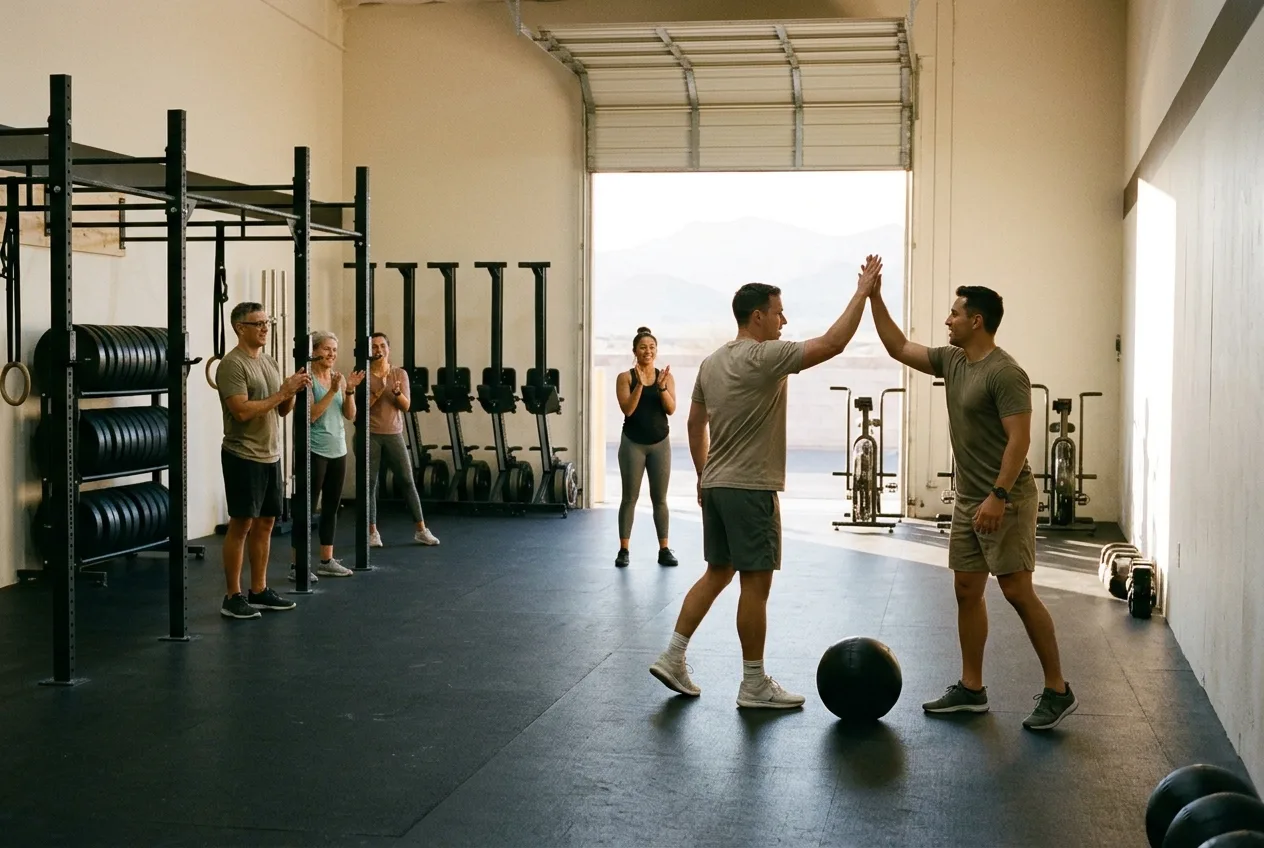
Because load, reps, movement, and pace can be tailored, a beginner and an experienced athlete can train side by side in the same 60-minute class. Each person works toward the same general training effect at an appropriate level, and competition is always optional.
How Coaches Spot When a Scale Needs Adjusting
Picking a starting weight or movement option is only step one. During practice sets and the early part of a workout, coaches watch how you move to see if your choice actually fits the goal of the session.
If a movement looks jerky, if your posture breaks down early, or if your pace drops to a crawl within the first two minutes, a coach may suggest lowering the load, trimming the reps, or switching to a more manageable variation. Conversely, if a coach sees crisp mechanics and plenty of room to work safely, they might encourage a slight increase in weight or steady pace.
How Scaling Changes as You Gain Experience
Scaling is not just for your first month in the gym. Even experienced members scale workouts regularly based on sleep, stress, schedule, or how a particular movement feels that day.
Early on, scaling often focuses on learning basic patterns with lighter weights, lower volume, and controlled speeds. Over time, as your coordination and work capacity grow, you may handle heavier loads or more complex variations while still scaling smartly on days when you feel tired or need a steadier effort.
If you have any health conditions or injuries, check with your healthcare provider and let your coach know about any limitations.
If you want to see how coaching and scaling work in person and talk through what makes sense for you, book a free intro at Talus.