Olympic weightlifting has two lifts: the snatch and the clean and jerk. Both involve lifting a barbell from the floor to overhead in coordinated, fast movements that rely heavily on timing, balance, and position rather than brute force alone.
The Two Lifts in Plain Terms
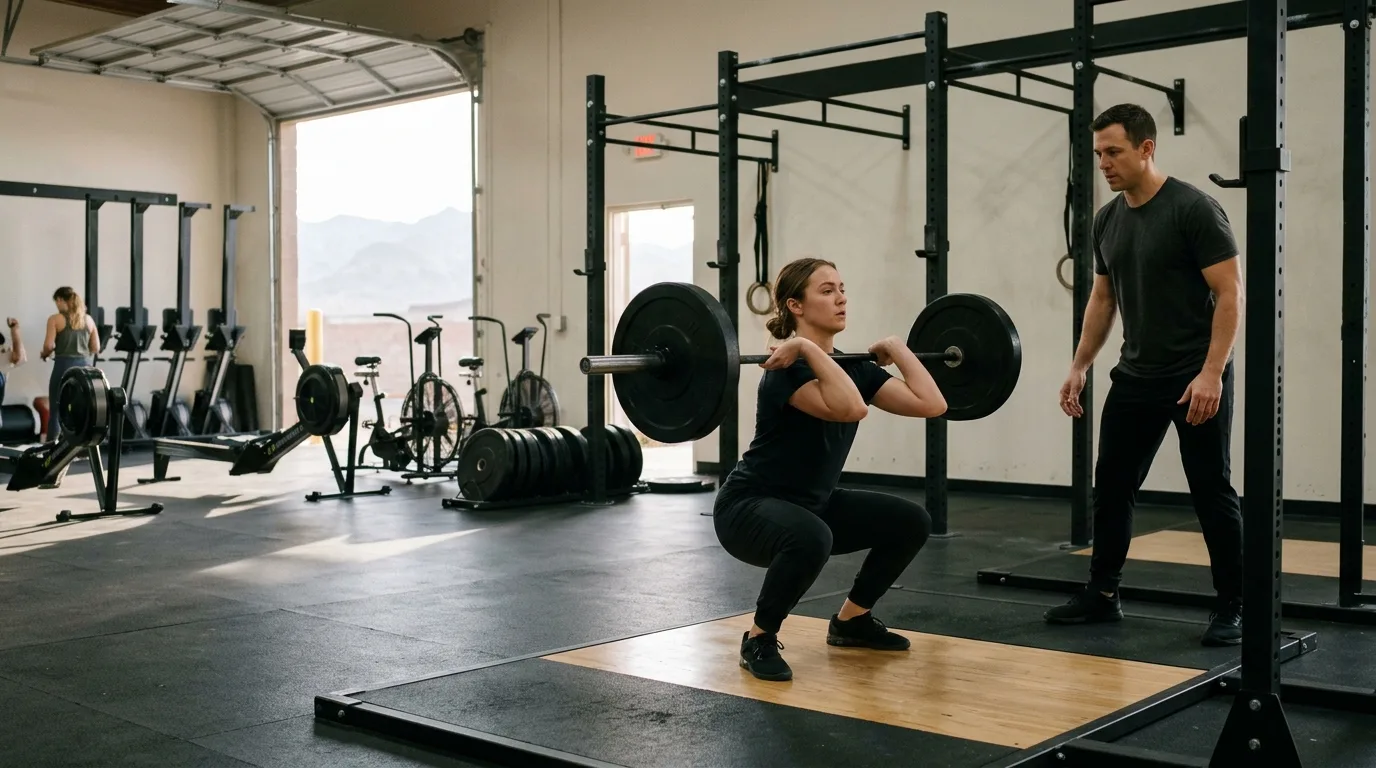
In the snatch, the barbell moves from the floor to overhead in one continuous motion. In the clean and jerk, the bar first comes to the front of the shoulders in the clean, and is then driven overhead into the jerk. Because both lifts ask your body to move quickly into receiving positions, learning clean mechanics comes first.
At Talus, our roughly 6,000 square foot space includes a dedicated Olympic lifting platform area with four platforms, plus barbells and bumper plates. Technique always comes ahead of chasing heavy weights.
A common mistake beginners make with barbell lifts is trying to pull the bar up with the arms too early or rushing overhead before the bar has proper momentum and balance. Practicing with light weights or a pvc pipe or empty bar helps you feel the sequence of positions without fighting heavy loads.
How Olympic Weightlifting Works at Talus
Olympic Weightlifting classes are coached by Maya Okafor, who holds USA Weightlifting Level 2 credentials and leads programming and Olympic weightlifting. Sessions run Tuesday and Thursday at 7:30 pm for 75 minutes.
- Prerequisites: The class requires completing On-Ramp and having comfort with a barbell.
- Technique focus: Sessions break down positions, bar path, and timing so you can practice repeatable mechanics.
- Scaled loads: Weights are adjusted to your current skill and comfort level rather than set at a single heavy number.
- Supportive progression: Building technical skill takes time and steady practice over months.
What Coaches Watch For and Who It Is For
During a 75-minute session, a coach watches starting stance, back angle off the floor, how close the bar stays to the body, and stability when receiving the bar in a squat or split position. Small adjustments to foot placement, timing, or overhead lockout often make a lift feel much more solid right away.
A simple routine for practicing these lifts is to break sessions into focused chunks: warm up thoroughly, drill positions and partials first, and only add weight when your mechanics stay consistent from rep to rep. Rest enough between sets so every attempt is deliberate rather than rushed.
Olympic Weightlifting suits members who have finished On-Ramp, feel comfortable handling a barbell, and want dedicated time on the snatch and the clean and jerk. If you are brand new to barbell training, On-Ramp gives you three private 45-minute sessions covering core movements like the squat, hinge, press, pull, row, and run mechanics first. Check with your healthcare provider if you have any health concerns.
If you are not sure where to start or want to talk through your experience with a coach, book a free intro for a 30-minute sit-down at the gym with no obligation to join.