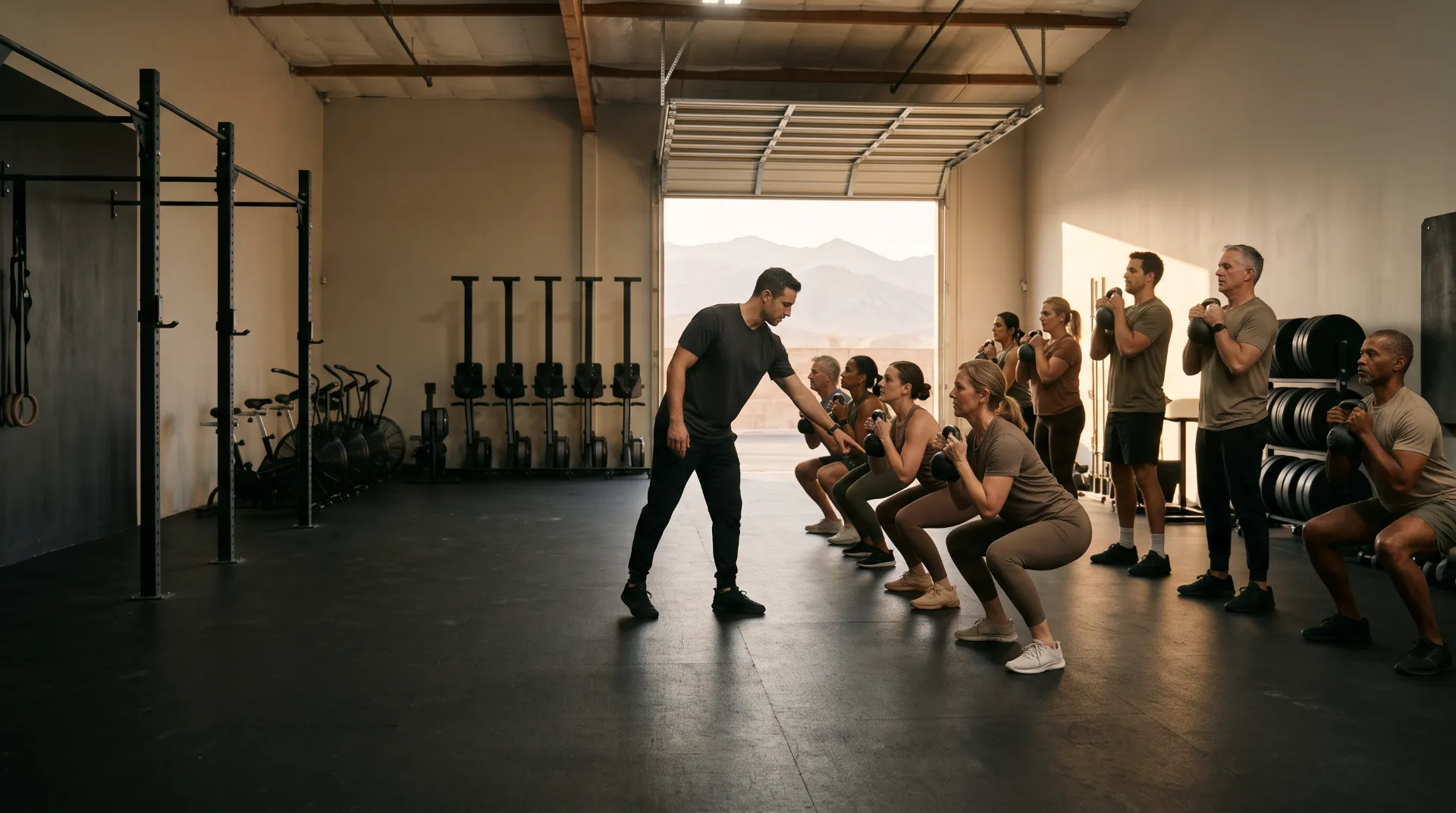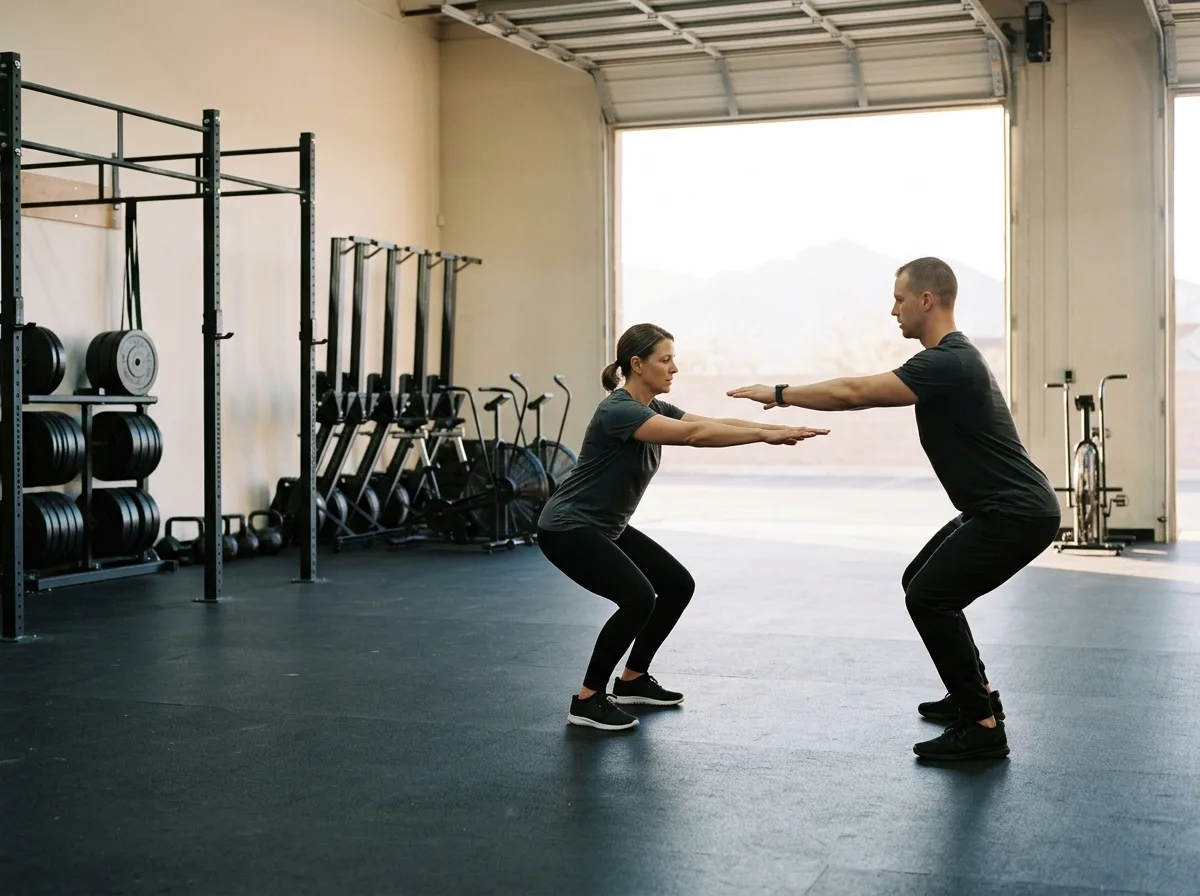
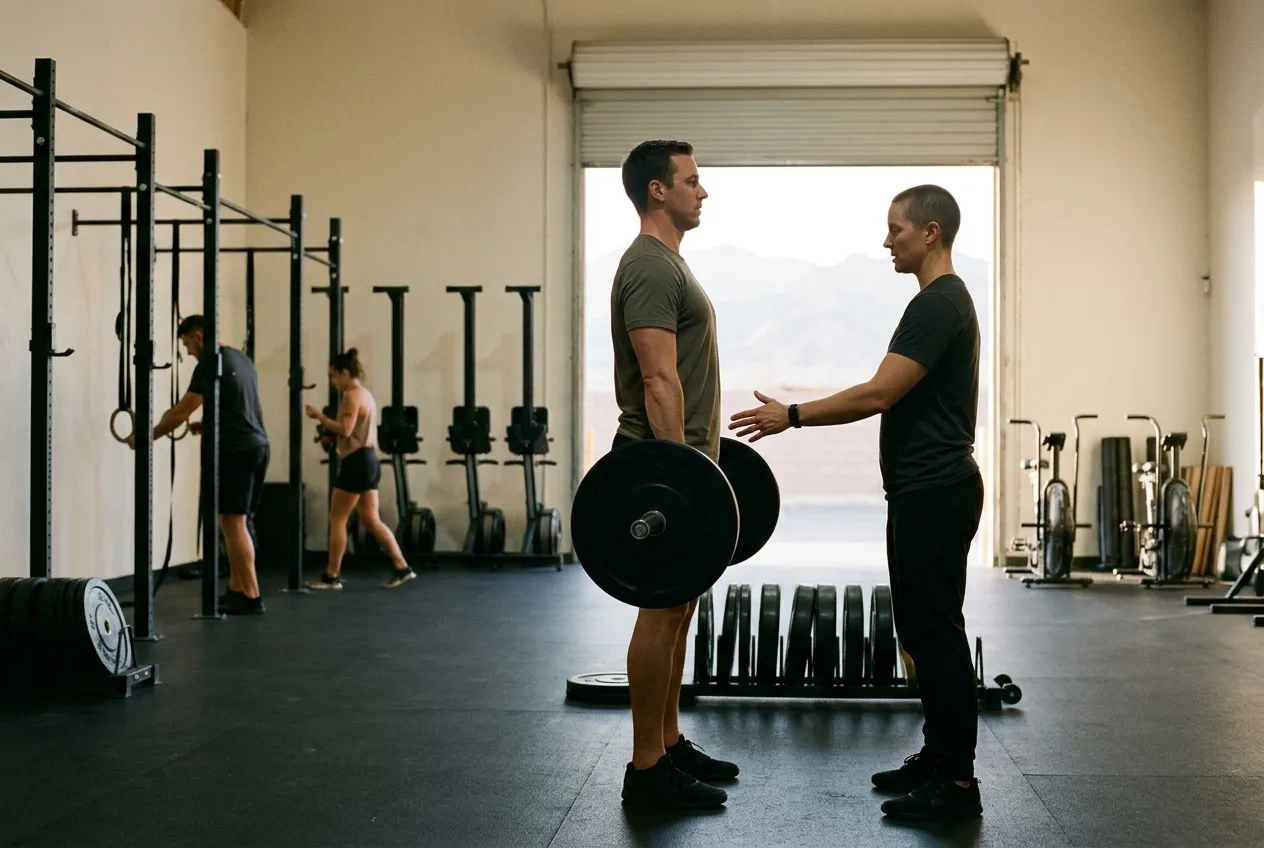
Picking things up off the floor is part of everyday life, whether you are lifting a box, setting down groceries, or picking up a kettlebell in the gym. In functional training, that fundamental movement pattern is called a hip hinge.
What the Hip Hinge Is
A hip hinge is a movement where your hips travel backward and forward while your spine stays neutral, rather than bending mainly through your lower back. As your hips shift back, you feel tension along the back of your legs, especially in your hamstrings and glutes, and then drive your hips forward to stand tall.
Why Coaches Teach It in On-Ramp
In On-Ramp, coaches introduce the hip hinge early because it teaches you how to bend and lift cleanly before adding heavier loads. Practicing the hinge with little or no weight gives you time to feel how your hips, torso, and feet coordinate without rushing.
Learning the pattern well during On-Ramp helps you build steady habits that carry over to everyday tasks and future strength work.
Simple Cues to Keep in Mind
- Hips Back: Push your hips back toward the wall behind you as you reach down, rather than dropping straight down like a squat.
- Flat Back: Keep your spine in a steady, neutral position from tailbone to head instead of rounding your upper or lower back.
- Soft Knees: Keep a slight, relaxed bend in your knees so your hips can move back smoothly without locking your legs stiffly.
Common Faults and What Coaches Watch For
When people are new to hinging, a few common mistakes show up often. One is rounding the back early to reach lower instead of pushing the hips back further. Another is bending the knees too deeply and turning the hinge into a squat, or letting weight shift forward onto the toes instead of keeping a steady balance over the middle of the foot.
Coaches watch where your hips stop moving back, how your lower and upper back hold their position, and whether your shins stay mostly vertical. If your hamstring tightness or mobility limits how far you hinge comfortably, a coach can scale the range of motion or weight so you practice a clean pattern.
How to Fix Common Hip Hinge Mistakes
Learning to hinge takes practice because many people are used to bending from the waist or squatting down whenever they reach for something low. Coaches use quick adjustments to help you feel the difference.
- Rounding Early: If your upper or lower back rounds as soon as you start, pause higher up, reset your posture, and push your hips back before reaching lower.
- Turning It Into a Squat: If your knees bend deeply and your hips drop straight down, keep your shins more upright and focus on sending your hips backward.
- Weight on the Toes: If your heels lift or weight shifts forward, settle your balance evenly across your whole foot before starting the next rep.
Coaches often place a hand or cue near your hips or spine to show where the motion should come from.
How the Hinge Carries Into Other Movements
Once you get comfortable with the hip hinge in On-Ramp, you will notice that pattern showing up in many other exercises. Kettlebell swings, deadlift variations, and certain rowing or pulling setups all rely on clean hip movement and a steady trunk.
As you gain experience, coaches watch whether you keep that same controlled hinge when weights get heavier or when you get tired late in a workout. If your form starts to slip under fatigue, stopping a rep short or lightening the load helps keep your mechanics clean.
If you have any back or joint concerns, check with your healthcare provider first and share any limitations with your coach.
If you have any back or joint concerns, check with your healthcare provider first and share any limitations with your coach. Book a free intro if you want to visit the gym and talk through getting started.