Squatting is one of the most familiar movements you do every day. Every time you sit down in a chair and stand back up, you are squatting. In On-Ramp, our coaches break the squat down into clear steps so you can build balance, control, and confidence at your own pace.
Bodyweight Squats and Goblet Squats
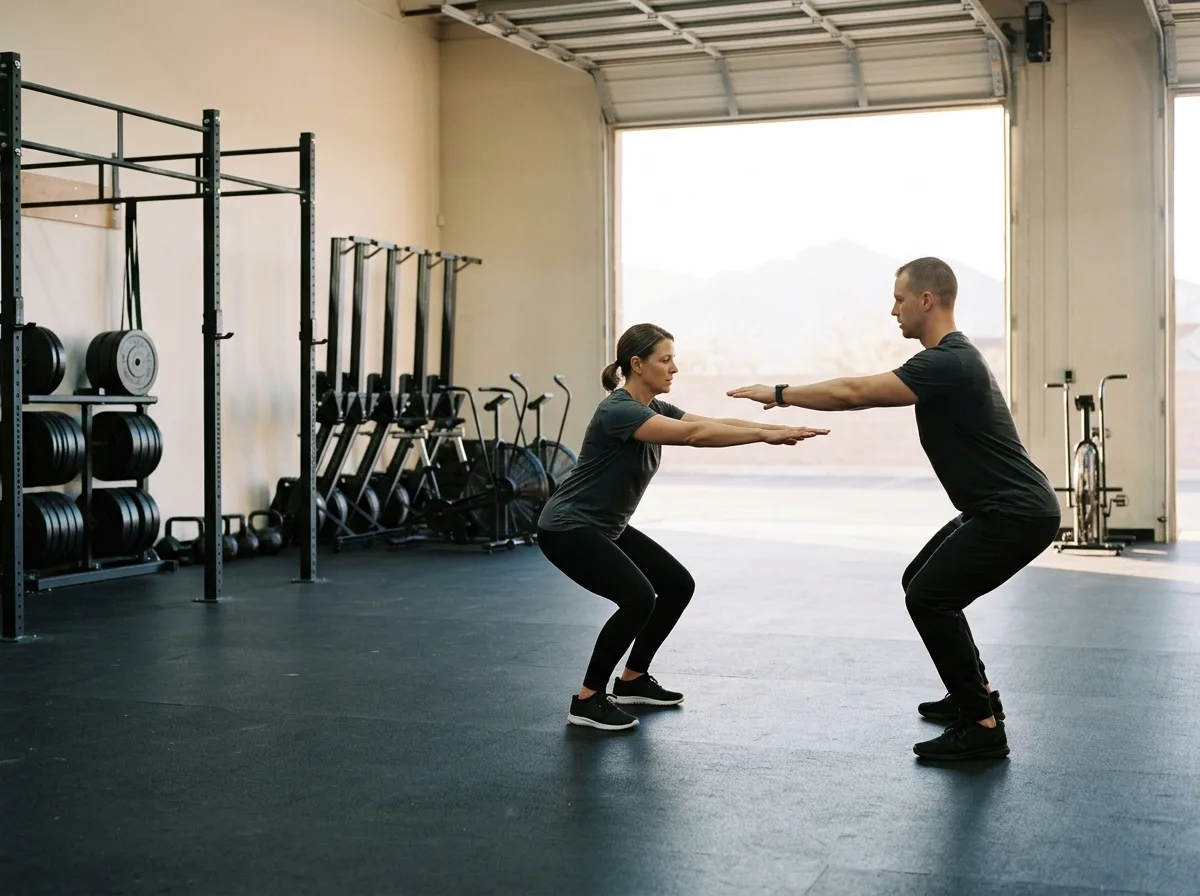
Most beginners start with the bodyweight squat. Without external weight, you can focus on foot placement, balance, and moving smoothly through a range of motion you control.
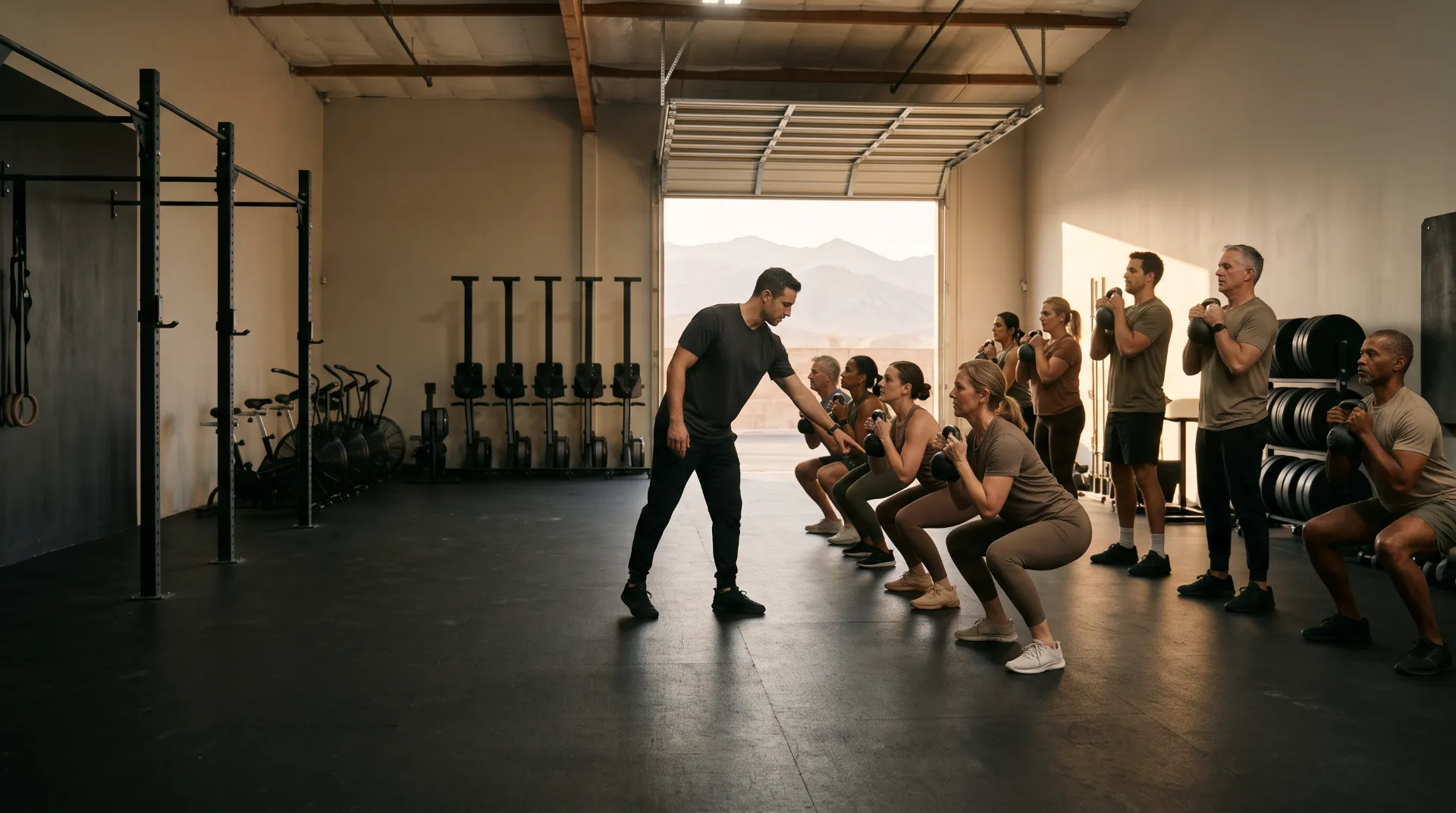
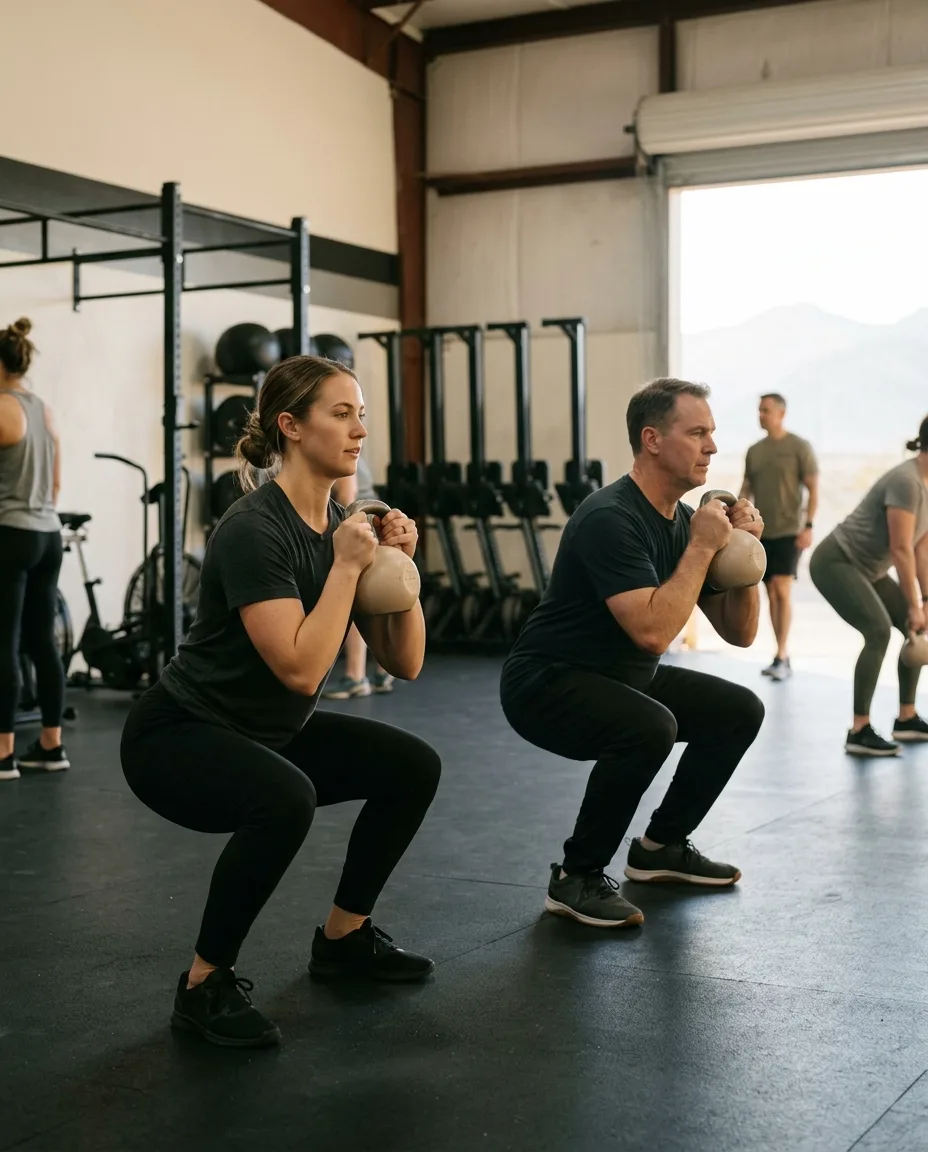
Once you have that rhythm, coaches often introduce a goblet squat, holding a kettlebell or dumbbell close to your chest. Holding a light load in front can help you stay more upright and give you a clear reference point as you sit back and stand up.
Finding a Depth That Fits You
Depth simply refers to how low your hips travel before you stand back up. You do not need to force the deepest possible squat on day one.
A depth that fits you is a position you can reach with control and stand up from smoothly without losing your balance or feeling pinched. Your comfortable depth can change over time as you practice and warm up, and coaches scale range of motion to match what you can control cleanly.
Helpful Cues and Why Practice Comes First
- Steady Foot Pressure: Keep your whole foot grounded with balanced weight so your heels do not lift early or your foot rolls inward or outward.
- Chest Proud, Torso Controlled: Lower your hips under control while keeping your chest up and your torso steady rather than collapsing forward.
- Knees Tracking in Line: Guide your knees in the general direction your toes point as you descend and stand back up.
Coaches emphasize practicing movement before adding load because steady mechanics are much easier to build with bodyweight or a light object first. Adding heavy load before you feel coordinated often leads to rushed reps, heels lifting, or knees caving inward. During practice sets, coaches watch your stance width, depth control, and posture so you can build solid habits first.
Practical Fixes for Common Squat Faults
Everyone has a slightly different bone structure and mobility profile, so coaches look at how your body moves rather than expecting identical angles from every person in the room.
- Heels Lifting Early: If your heels pop up as you descend, check your foot stance, keep steady pressure through the whole foot, and only go as deep as your heels stay planted.
- Knees Caving In: If your knees drift inward on the way up, gently push your knees out in line with your toes and slow down the rep.
- Chest Dropping Forward: If your torso tips far forward, pause at a comfortable depth, keep your chest lifted, and lighten the load if needed.
Coaches watch from the front and side during practice reps to give clear, practical feedback.
How Squats Progress Over Time
In On-Ramp, building a smooth bodyweight or light goblet squat sets the standard before you move on to heavier or more demanding squat variations in group classes. A common mistake is rushing to add weight before you can control the bottom of the squat without bouncing or losing balance.
As you gain experience and consistency over months, coaches watch your control, depth consistency, and ability to stand up smoothly from each rep. Adding load happens gradually once your movement stays steady under lighter practice sets.
If you have any joint or health conditions, check with your healthcare provider and let your coach know about any limitations.
If you have any joint or health conditions, check with your healthcare provider and let your coach know about any limitations so they can scale your squats safely. Book a free intro to meet a coach, tour the gym, and see how On-Ramp fits into your schedule.