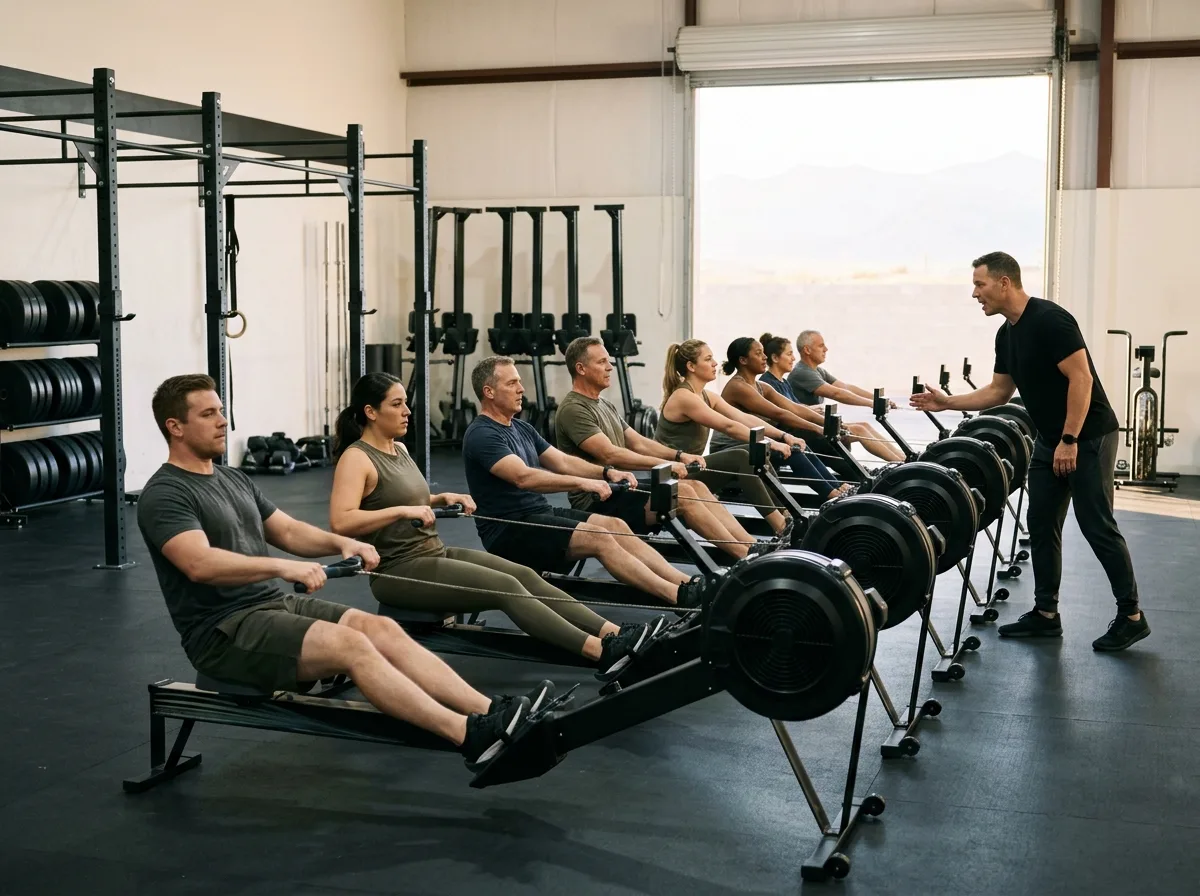
Rowing is a staple in functional fitness because it uses the lower body, trunk, and upper body in a coordinated cycle without impact on the joints. When your timing clicks, a rowing machine feels smooth and steady; when the order gets mixed up, you burn out your arms early and lose power.
Machine Setup and Foot Straps
Before you take your first stroke, set the foot stretchers so the strap crosses the widest part of your foot, typically near the ball of the foot. Tighten the straps snugly so your heels can lift slightly during the return without your feet slipping out. Sit tall near the middle of the seat with your shoulders relaxed and your grip on the handle comfortable rather than white-knuckled.
The Stroke Order: Legs, Body, Arms
A clean rowing stroke follows a clear sequence from catch to finish, then reverses on the way back. Think of it in three parts during the drive:
- Drive with the legs: Push through the balls of your feet and straighten your legs first while keeping your torso braced and your arms straight.
- Swing the body: Once your legs are mostly extended, hinge gently back slightly from the hips so your core stays engaged.
- Finish with the arms: Pull the handle smoothly toward your lower ribs or solar plexus, keeping your wrists flat and elbows tracking back.
The Recovery in Reverse
Getting back to the starting position is just as important as the power phase. Extend your arms away from your body first, hinge forward from the hips once the handle passes your knees, and then bend your knees to slide forward. Rushing the slide forward often causes you to bounce up and down or cut your stroke short.
Common Mistakes to Watch For
One of the most frequent mistakes is pulling early with the arms while the legs are still bent. That turns a full-body stroke into a repetitive arm pull and tires your upper body quickly. Another common issue is hunching over at the front of the stroke or letting the knees flare out awkwardly as you slide forward. In Las Vegas summers, remember that heat adds up fast, so hydrate before and after training and keep your pace controlled during longer pieces.
How Coaches Use Rowing in Classes
In group classes and HYROX training at Talus, rowing shows up for short intervals, steady endurance pieces, and mixed conditioning workouts. Because rowing is easy to scale by pace, stroke rate, and distance, a beginner and an experienced athlete can work side by side and still get the intended stimulus for the day. Coaches watch posture and stroke order so you can keep a consistent rhythm as fatigue builds.
Common Rowing Mistakes and How to Fix Them
Rushing the stroke is the fastest way to lose efficiency on the rower. Many beginners bend their knees too early on the return or lean back too far at the finish, which makes the stroke choppy and harder to repeat.
- Pulling with the arms too soon: Keep your arms straight until your legs press down and drive the seat back, then finish with the arms.
- Rushing the slide forward: Extend your arms first, hinge gently at the hips, and bend your knees last so you return smoothly to the catch.
- Grip tension: Hold the handle firmly enough to stay connected without squeezing so hard that your forearms tire out early.
How Rowing Changes as You Gain Experience
As you row more often over months, you learn to match your effort to the workout rather than treating every piece like an all-out sprint. Newer rowers often focus on smooth sequencing and steady breathing across short intervals.
With more experience, you can hold steadier split times, shift smoothly between moderate and brisk paces, and pair rowing with running, sleds, or strength work in group classes or HYROX training.
If you want to see the gym and talk through how classes are set up, book a free intro. It is a 30-minute sit-down with a coach at the gym that includes a tour and a conversation about your goals, experience, schedule, and any limitations, with no workout and no obligation to join.